The Apparatus Train — study notes
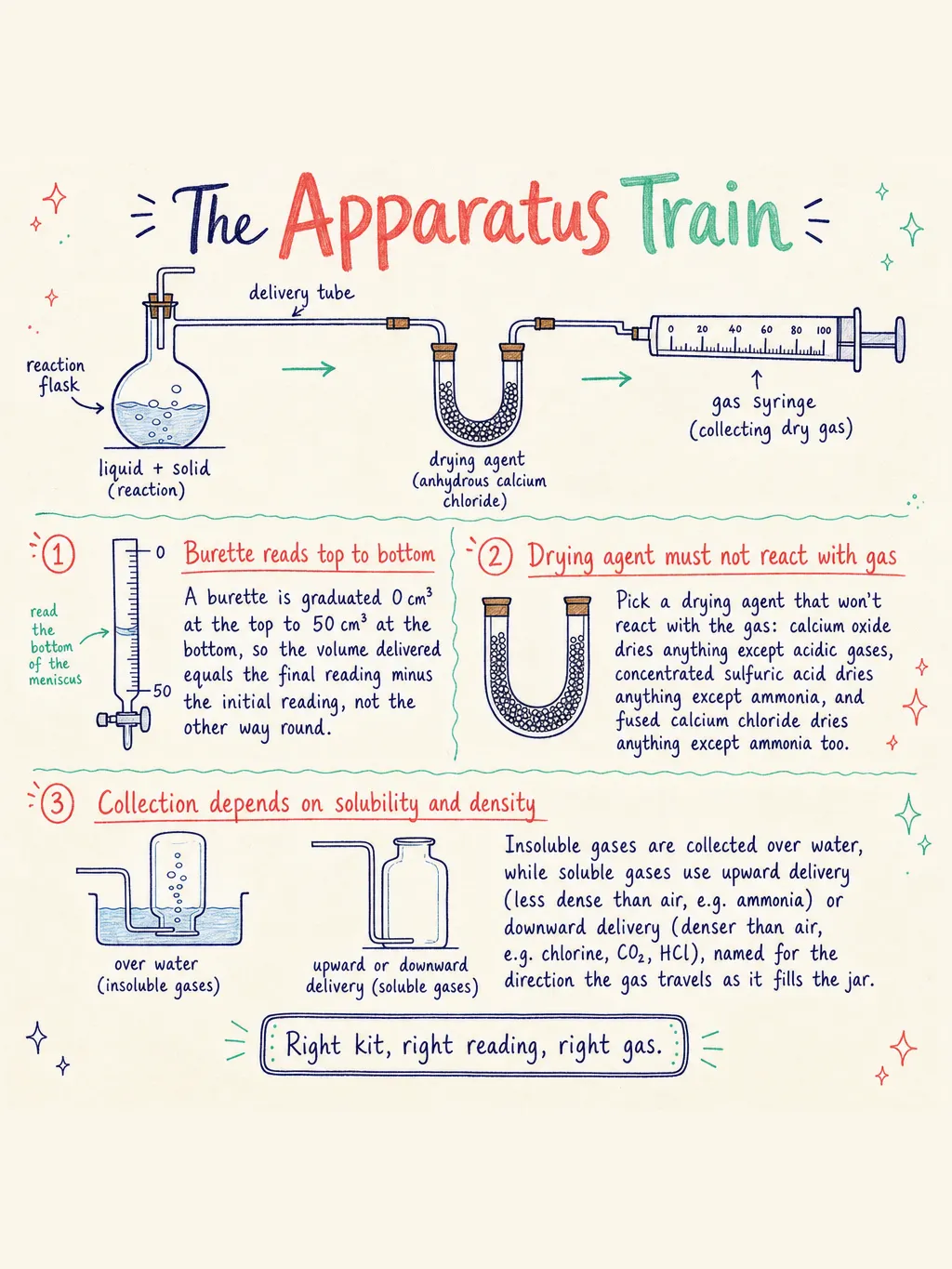
Imagine trying to portion out a single drop of medicine using a bucket. You could sort of manage it, but nobody would trust the dose. That's the whole problem this topic solves: matching lab kit to the precision a measurement actually needs, so an examiner can't poke a hole in your method.
Matching the Tool to the Job
Every piece of glassware in the lab exists because a different kind of question needed asking. Sometimes you just want a rough amount poured out quickly; other times the number has to be exact to a fraction of a unit, or has to stay exact and repeatable across several trials. Apparatus questions in the exam are really asking one thing: what level of accuracy does this step of the experiment require, and which tool was built for exactly that level? Pick a tool that's too coarse and your result is a guess dressed up as data; pick one that's needlessly fussy and you've wasted time you didn't have. The habit worth building is to ask, before touching any equipment, "does this step need a fixed amount, a variable amount added gradually, or just a ballpark figure?" — the answer points straight at the right piece of kit. For liquids, that question sorts the glassware neatly: a measuring cylinder handles ballpark jobs, a pipette gives one fixed, highly accurate amount every repeat (commonly 25.0 cm³), and a burette — a tall, narrow tube with a tap at its base — releases liquid gradually while tracking exactly how much has gone in.
Worked Example — Working Out a Volume Delivered from a Burette
- Know how the scale works first: a burette is numbered with 0 at the top and 50 cm³ at the bottom, so as liquid runs out through the tap, the number you read gets bigger, not smaller. The scale is really tracking how far the level has fallen.
- A student notes the reading before opening the tap: 1.20 cm³. (It doesn't need to start at exactly 0.00 — you just record wherever it starts.)
- Once enough liquid has been run in, the reading is 28.60 cm³.
- Because the scale measures the drop in level, the amount actually delivered is final reading − initial reading: 28.60 − 1.20 = 27.40 cm³.
Notice the answer comes from subtracting readings, never from quoting the final number alone — writing "28.60 cm³ was delivered" is the classic mark-losing slip, because that's just where the level ended up, not how much came out.
The remaining apparatus — how to pick, dry and safely collect gases, plus every other worked example — plus a full audio walkthrough and a practice worksheet, are waiting in the full lesson below.
Keep going — unlock the whole topic
Notes, audio and the worksheet for this topic, plus every other topic in the subject.
Claim a free seat →