Percentage — Study Notes
A town's population climbs from 40,000 to 46,000 in a single year. The raw jump — 6,000 people — barely tells you whether that's alarming or unremarkable, but rescale it into a percentage and anyone can judge the size of the change at a glance.
Turning a Change into a Single Rescaled Number
A percentage is a fraction that's been rescaled so its bottom number is always 100, which is exactly why it compares so well across wildly different situations. To measure how much a quantity has grown or shrunk, weigh the size of the change against where it started, then rescale that ratio onto the hundred-point ladder:
percentage change = (change ÷ original) × 100
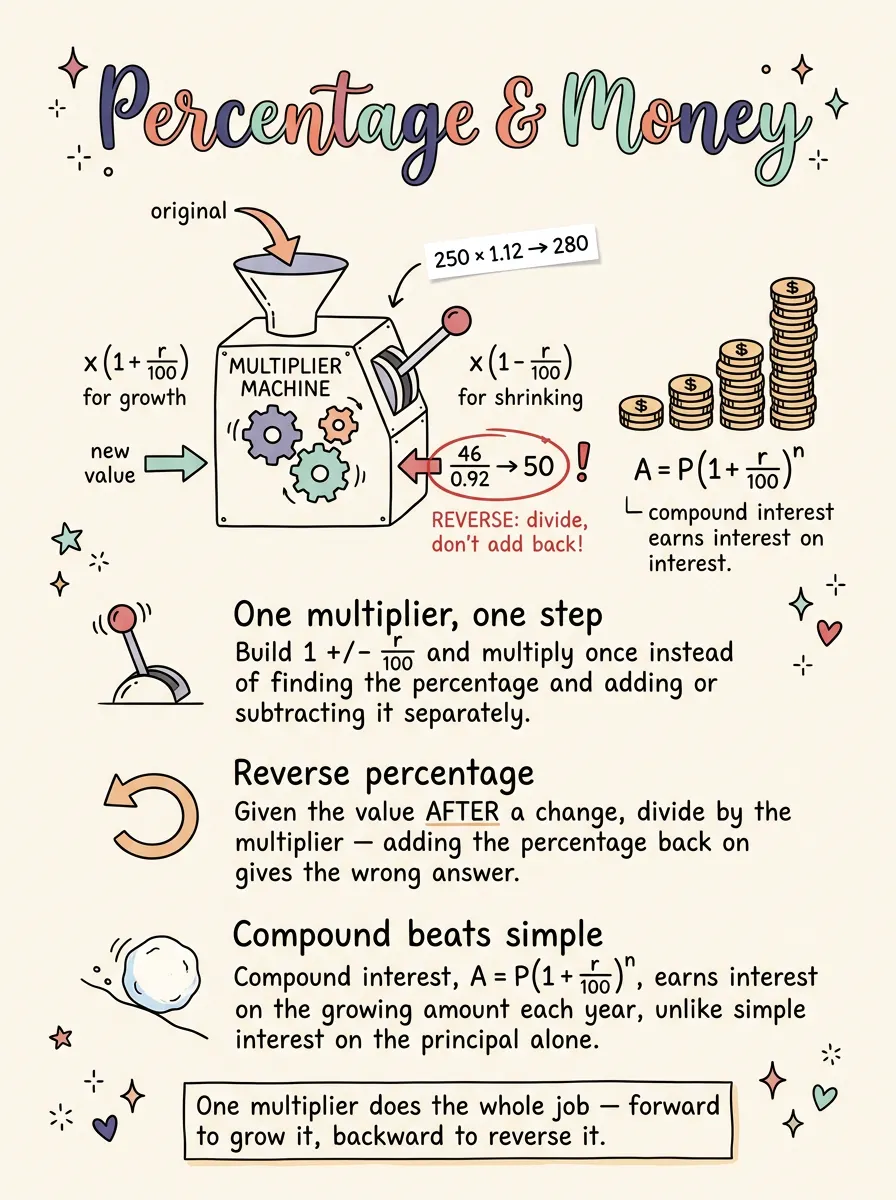
Once you have that ratio, one habit saves a step later: rather than working out the change and adding it back on separately, build a single multiplier — 1 plus the change written as a decimal for growth, or 1 minus it for shrinkage — so one multiplication lands you straight on the new value.
Worked Example — Finding a Percentage Increase
- A farm harvested 250 crates of mangoes last season and 310 crates this season. Find the size of the change: 310 − 250 = 60 crates.
- Weigh that change against the season it started from — the original 250, never the new total: 60 ÷ 250 = 0.24.
- Rescale onto the hundred-point ladder by multiplying by 100: 0.24 × 100 = a 24% increase.
Notice the change sits over the original 250 the whole time — dividing by the newer number instead is the slip that catches most students on this style of question.
The multiplier shortcut, working backwards from a changed value to recover where it started, and how the same ideas drive interest, tax and instalment questions are waiting for you in the full lesson below, alongside an audio walkthrough and worksheet.
Keep going — unlock the whole topic
Notes, audio and the worksheet for this topic, plus every other topic in the subject.
Claim a free seat →