Human Reproductive System — Study Notes
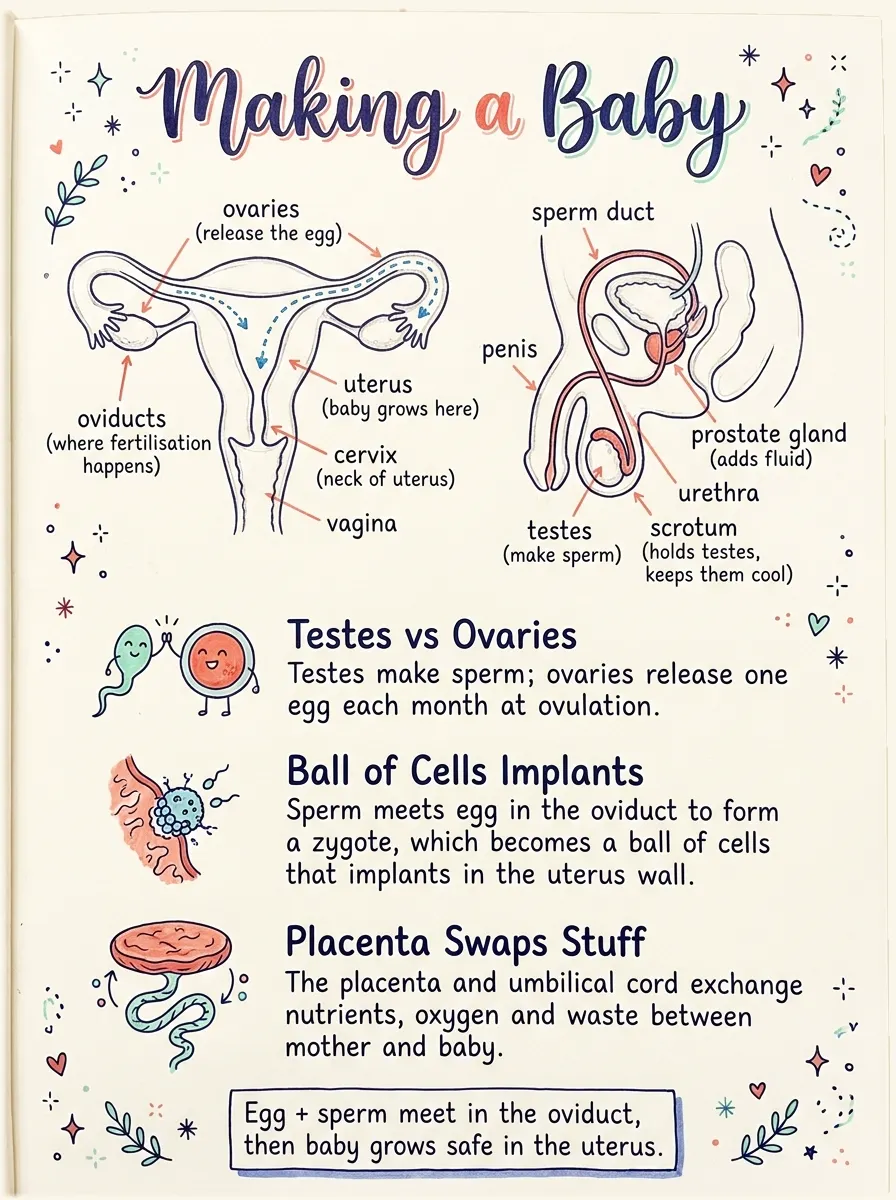
You already know sperm needs to be made a little below normal body temperature — that's why the testes hang externally, inside the scrotum. So here's a question examiners like to flip on you: eggs are made in the ovaries too — so why don't the ovaries need the same cooling treatment?
Read Every Organ as a Job Description
The reproductive system rewards a different way of revising than pure memorising. Instead of learning a list of organ names, ask what problem each structure solves. A tube that has to stretch and then contract is built from muscle. A surface that has to sweep something along without that thing being able to move itself gets lined with cilia. A gland that has to keep a delicate cell alive on a journey adds fluid full of energy and protection.
That "structure follows job" habit is exactly what O-Level markers are checking for in "explain why" questions — they want the specific reason a structure is shaped the way it is, not just its name.
Worked Example — Why doesn't the ovary need to sit outside the body?
- Start with what makes the testis unusual: it keeps manufacturing sperm nonstop, and that manufacturing only runs properly a little below normal body temperature — which is why it needs an external, coolable pouch.
- Now compare the ovary: a female is born already holding her entire supply of egg cells, so there is no ongoing manufacturing line running inside the ovary that needs shielding from heat.
- With no continuous heat-sensitive process to protect, the ovary has nothing to gain from sitting outside the body — so, like almost every other internal organ, it stays safely tucked inside the body cavity.
Notice the shape of that answer: identify the job a structure does, check whether it's ongoing or already finished, then match the location to what the job actually needs.
That same job-first habit is what the audio walkthrough drills into every organ, hormone and stage in the full lesson below — along with the worksheet and the remaining worked reasoning questions on the menstrual cycle, the placenta and contraception.
Keep going — unlock the whole topic
Notes, audio and the worksheet for this topic, plus every other topic in the subject.
Claim a free seat →