Situational Writing — Study Notes
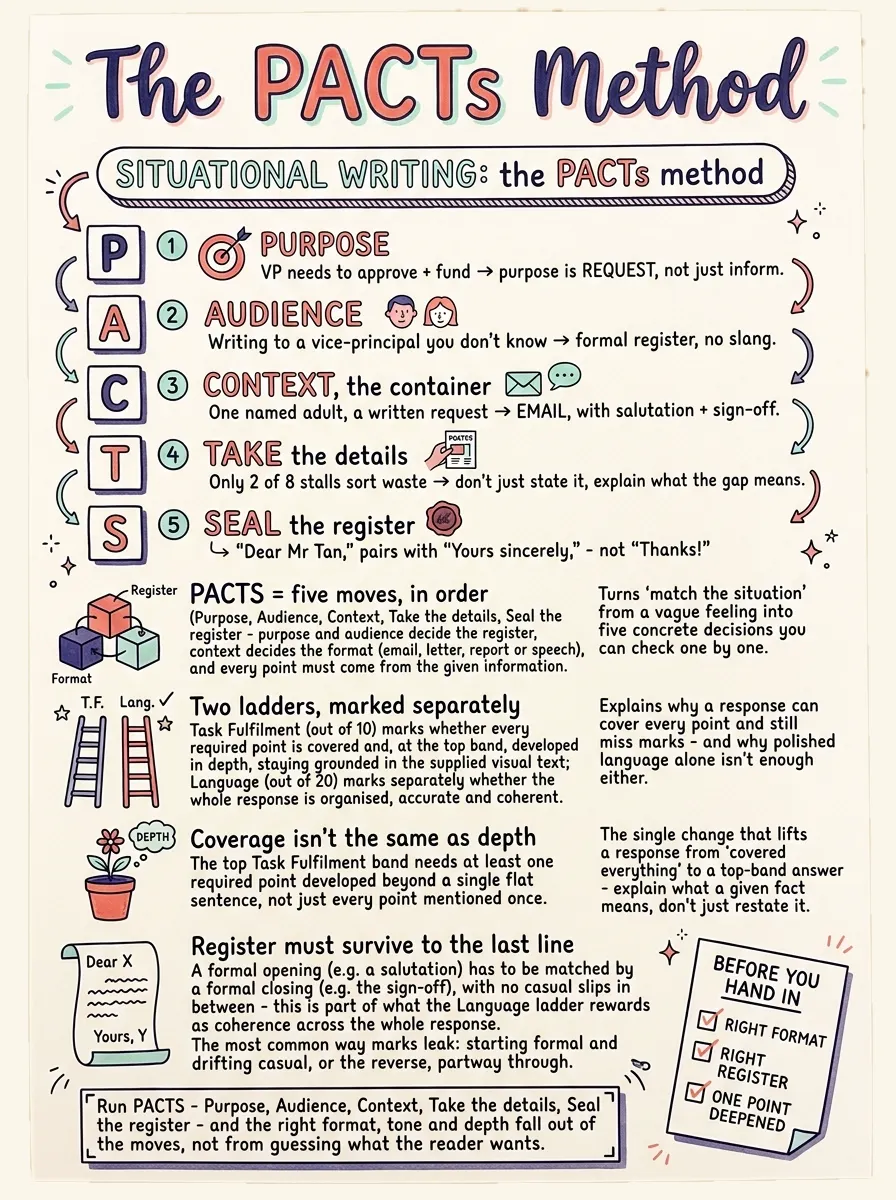
Hand two students the same poster and the same instructions, and one of them will still lose marks before they've written a single fact — because they never worked out who they're supposed to be on the page. Situational writing marks you on the persona as much as the content, and that's the piece most answers skip.
Why the Same Facts Can Score Differently
Every situational task hands you three things buried in the instructions: a role you're writing as, a reader you're writing to, and a job the writing has to do — ask, inform, thank, object. Nail those three and the shape of your answer almost writes itself: a stranger in charge demands a formal voice and a proper greeting-and-close; a classmate or relative allows something looser. Miss them, and even accurate content reads like it landed in the wrong inbox. The trick isn't memorising sentence starters — it's reading the task line twice, underlining the role, the reader and the job, before your pen touches the format at all.
Worked Example — Turning a bald instruction into a properly aimed opening line
- Task: "As head of your neighbourhood's youth group, write to the community centre manager asking for the badminton court's booking hours to be extended into weekday evenings."
- Underline the three anchors: role = youth-group head (someone with standing to ask), reader = centre manager (an adult in charge you don't know personally), job = request extended hours.
- Reader-in-charge-but-unnamed-by-name-only tells you the register: formal, no contractions, a proper salutation such as "Dear Sir/Madam," if no name is given.
- Open with the job stated plainly, not buried: "I am writing to request that weekday evening slots be added to the badminton court's booking hours." One sentence, and the marker already knows exactly why you're writing and who gave you the standing to ask.
That underline-three-anchors habit is worth doing on every situational task you attempt, formal or casual. The full lesson below walks through the matching audio explanation, the remaining worked examples across letters, reports and speeches, and a practice worksheet to drill the routine until it's automatic.
Keep going — unlock the whole topic
Notes, audio and the worksheet for this topic, plus every other topic in the subject.
Claim a free seat →