Spoken Interaction — Study Notes
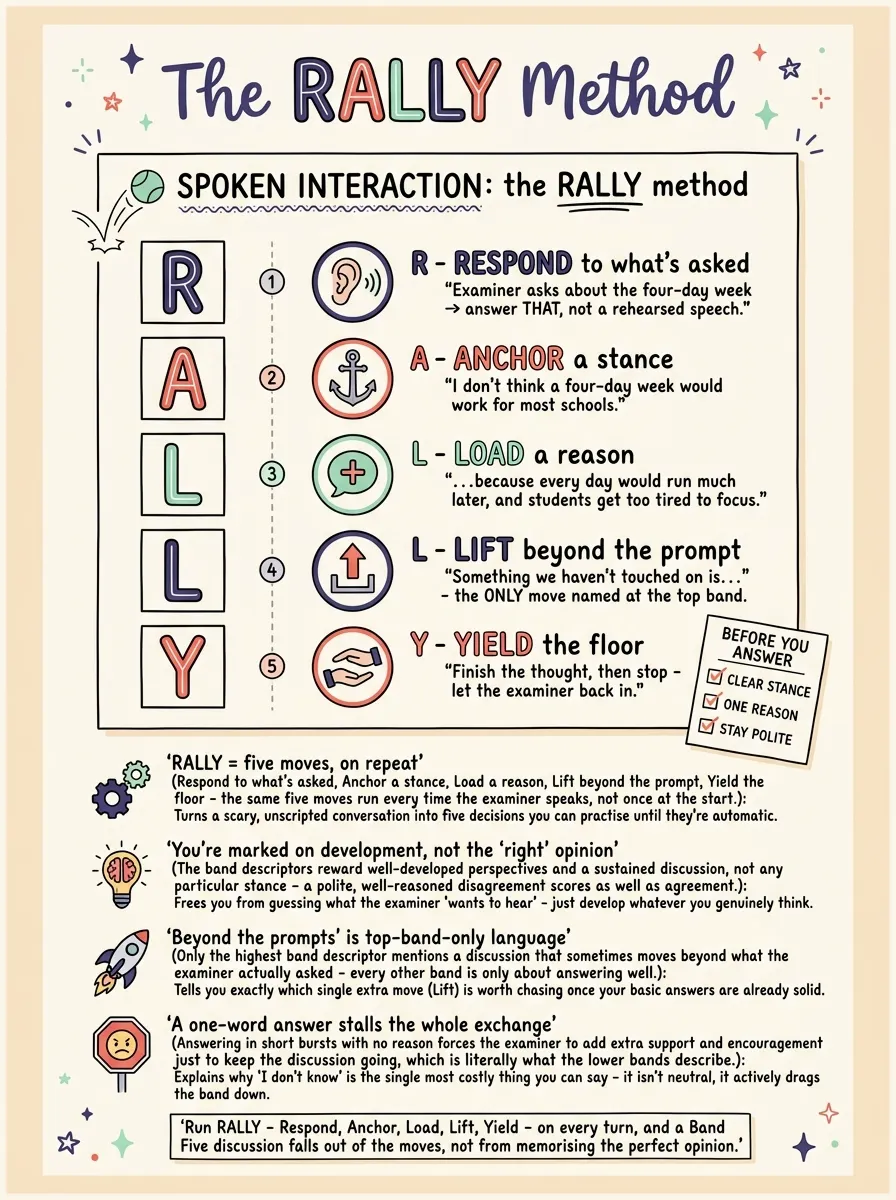
Picture the moment: someone you've just met asks what you think about a two-minute clip you watched minutes earlier, and you have to answer live, with nothing rehearsed to fall back on. Then a follow-up lands. It can feel like being grilled, but a spoken discussion isn't a memory test or a performance — it's a live exchange, and the moves that earn marks can be learned.
What actually earns the marks
Markers aren't scoring whether they happen to agree with your opinion — they're listening for a real position, held up and kept alive across the whole conversation. Three things matter most. Take an actual side early, rather than hedging with a vague "it depends" that never lands anywhere. Back that side with one reason explored properly, instead of three reasons each mentioned and dropped. And engage with whatever comes next specifically — a rehearsed line that ignores it makes you sound like you'd stopped paying attention. Beyond those three, offering an idea nobody asked for is the habit that separates a solid answer from an outstanding one. Nail this and the conversation starts sustaining itself, with barely any prompting needed.
Worked Example — Turning a flat opinion into a scored answer
Suppose the clip showed a canteen trialling a ban on sugary drinks, and you're asked what you think.
- Open with your actual position, not a shrug: "I think banning sugary drinks in the canteen is a sensible move." A marker now has something concrete to judge.
- Give that position one properly built reason rather than a list: "...because students often reach for the sweetest option out of habit, not because they've weighed it against anything healthier that's sitting right next to it."
- When the follow-up lands — say, "Shouldn't students be free to choose for themselves?" — engage with it directly rather than repeating your opening: "That's fair, and choice does matter — but removing the sweetest option doesn't remove choice, it just narrows it to healthier ones."
- Offer something the question never raised: "Worth adding — a lot of students only drink water at school because nothing sweeter is on sale, so take the ban away and that habit likely goes too."
- Close on a finished thought and stop, which hands the floor back rather than drifting into a second speech.
That shape is the engine behind every strong discussion answer — turning it into a routine you can run under pressure, an annotated model exchange, the traps that quietly cap a score, and a listen-along audio walkthrough with worksheet, are in the full lesson below.
Keep going — unlock the whole topic
Notes, audio and the worksheet for this topic, plus every other topic in the subject.
Claim a free seat →