The Heart: Structure, Cardiac Cycle and Coronary Heart Disease — Study Notes
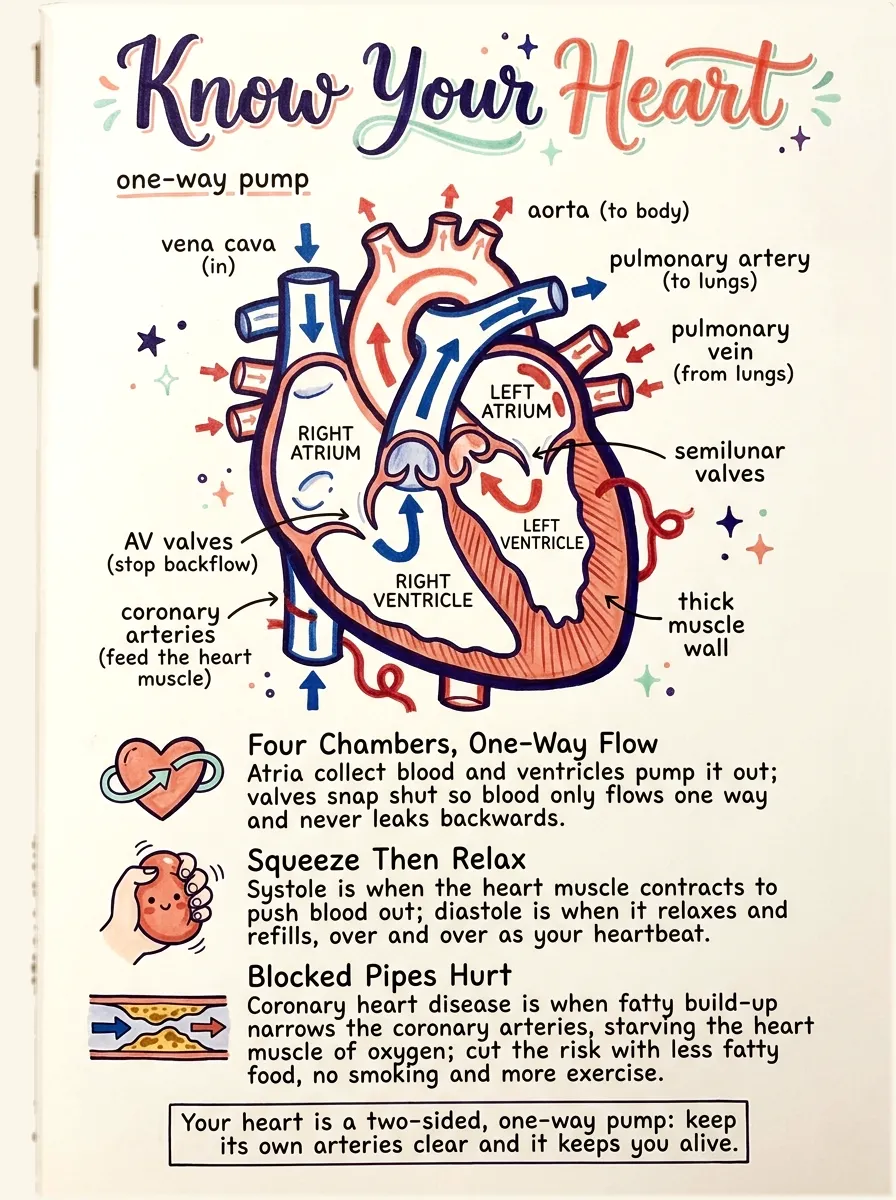
Your heart contracts about 100,000 times before you go to sleep tonight, and not one of those beats needed your permission. What keeps every contraction pushing blood the same way round, beat after beat, for decades? The answer sits in how the heart is built and timed — not in willpower.
The Chamber-and-Valve System That Keeps Blood Moving One Way
The heart is split into four separate chambers rather than one big pumping bag, because collecting blood and pushing blood out are two different jobs. The upper pair, the atria, simply receive incoming blood and pass it downward — a short trip needing little muscle. The lower pair, the ventricles, must force blood entirely clear of the heart and into the connecting arteries, so their walls carry far more muscle. Because the left ventricle alone drives blood around the entire body against real resistance, its wall ends up thicker than any other chamber's.
Muscle alone can't guarantee blood only travels forward, though — squeezed blood will happily flow backward if nothing stops it. That's the job of valves: flaps of tissue positioned between atria and ventricles, and again between ventricles and the arteries, each one snapping shut the moment pressure tries to push blood the wrong way.
Worked Example — Tracing One Complete Heartbeat
- Both atria squeeze together, forcing the blood they hold down into the ventricles beneath them.
- The instant that squeeze finishes, the valves between atria and ventricles snap shut, sealing the ventricles into a closed space.
- Both ventricles now squeeze against that sealed space, building enough pressure to force their own valves open and drive blood out into the arteries.
- Once the ventricles finish squeezing, the artery-side valves shut too, stopping that ejected blood from sliding backward.
- Every chamber relaxes together and refills passively with blood, ready for the sequence to repeat.
Notice why the order matters: skip step 2, and the ventricles would waste their squeeze sending blood the wrong way, back up toward the atria, rather than forward into the body.
This same one-way logic is what explains why a blocked coronary artery turns dangerous, why a blood pressure reading carries two separate numbers, and what actually goes wrong when a valve fails — walked through with a full audio explanation and practice worksheet in the lesson below.
Keep going — unlock the whole topic
Notes, audio and the worksheet for this topic, plus every other topic in the subject.
Claim a free seat →